Why KNX houses go wrong in Dubai
KNX is an open, wired standard, and it very rarely fails on its own. When a KNX villa misbehaves the cause is almost always in the programming: group addresses built without a plan, a climate gateway parametered for the wrong indoor units, scenes that fire at the wrong time, a keypad that does three things nobody asked for. The second cause is documentation. Without the ETS project nothing can be diagnosed, so the next contractor guesses, and the house gets a little worse with every visit.
The fix is engineering, not replacement. As a KNX Partner we read the installation from the devices themselves, redesign the addressing, re-parameter the gateways and rewrite the keypads, and commission the house room by room with the owners present.
How a KNX takeover works
First the audit: every device on the bus identified and documented as built, the existing project recovered where one exists, and a written picture of what is broken, what is badly programmed and what is fine. Then the rebuild: a clean group address architecture for lighting, climate, shading and scenes, each in its own logical block, with names the next engineer can read. Then commissioning, then handover. The Jumeirah villa whose air conditioning had stopped working is the typical case: no new hardware, every room holding its set point by the end.
Adding logic, visualisation and an interface
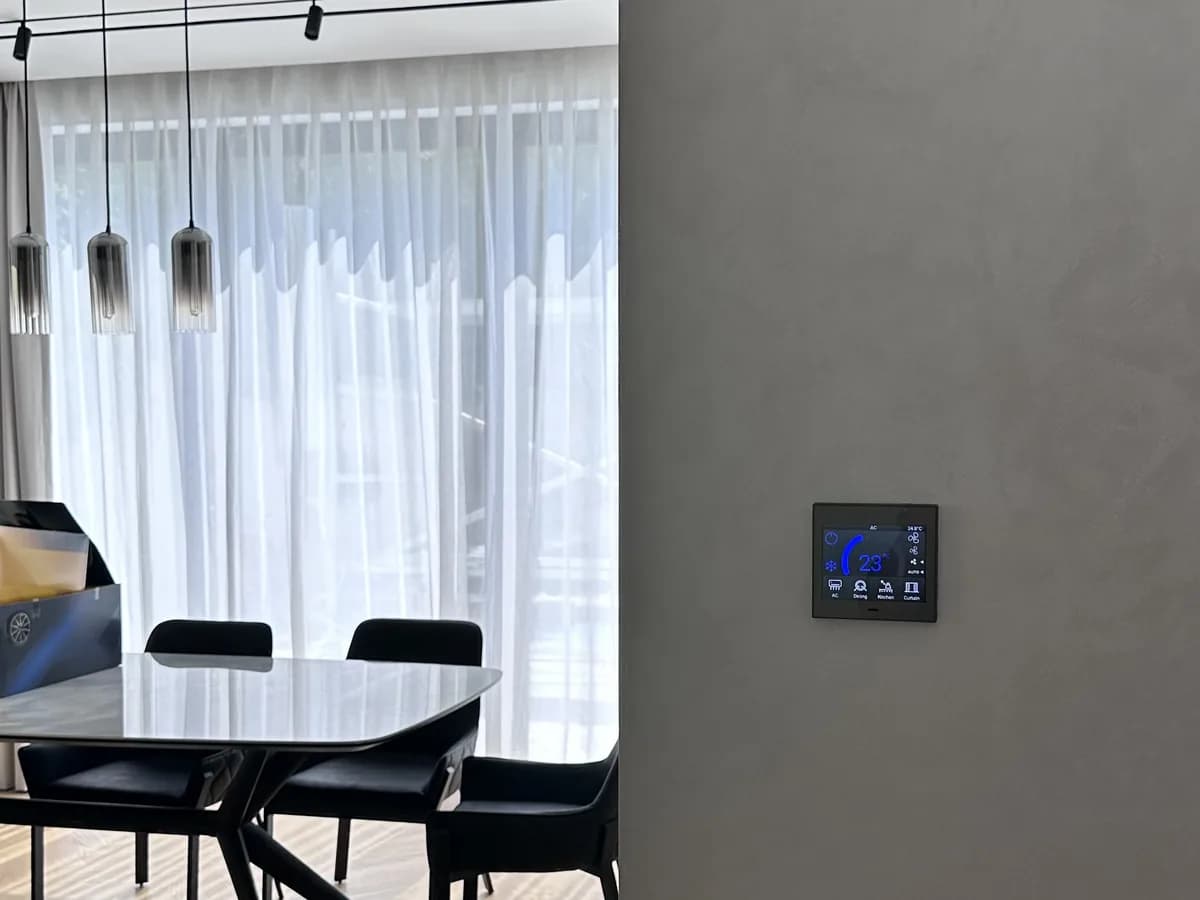
Many Dubai KNX villas were commissioned to the minimum: switches that switch and nothing more. The backbone can do far more, and most of it is programming. Scenes at the door, timers and presence logic, holiday behaviour, DALI dimming curves set for the fittings, a visualisation on a wall panel or the family's phones. Where the household wants one app for lighting, climate, audio, cameras and the door, Control4 goes on top of the KNX backbone as the interface, which is how our largest houses run.
The ETS file left in the panel
Every KNX project we touch is handed over the same way: the ETS project, the group address schedule and the device list in your Client Portal, and a copy left in the distribution board. It is the difference between a house that is yours and a house that is captive to whoever programmed it last, and it applies to us as much as to anyone. From there the system goes under Iconic Care™, with remote-first support from the engineers who did the work.