The property
A private villa in Jumeirah, one of Dubai's established communities, on a generous plot. The house had been renovated at least once and already ran a KNX system for lighting and air conditioning, installed and programmed by a previous contractor who had since moved on.
The problem
The owners called us with a problem that is more common in Dubai than anyone likes to admit. The air conditioning had stopped behaving. Some rooms would not respond at all. Others ran regardless of the set point. Keypads did things nobody had asked for. Summer was coming.
KNX is a robust, open standard and very rarely fails on its own; when a KNX house misbehaves the cause is almost always the programming, and that is what we found. The group address structure had been built without a plan, so lighting and climate objects were mixed on the same addresses. The HVAC gateway had been parametered for the wrong unit types, so the bus was sending commands the air conditioning could not act on. And no ETS project file had been handed over, which meant nothing could be diagnosed without first rebuilding the picture of the system from the devices themselves.
The design
The first decision was to replace nothing. None of this needed new hardware; it needed someone who understood the standard to sit down and do the engineering properly. The design work was a clean group address architecture for the whole house, lighting, HVAC and scenes each in their own logical block, with a naming convention the next engineer will be able to follow, and a keypad plan in which each button does one obvious thing.
Technology stack
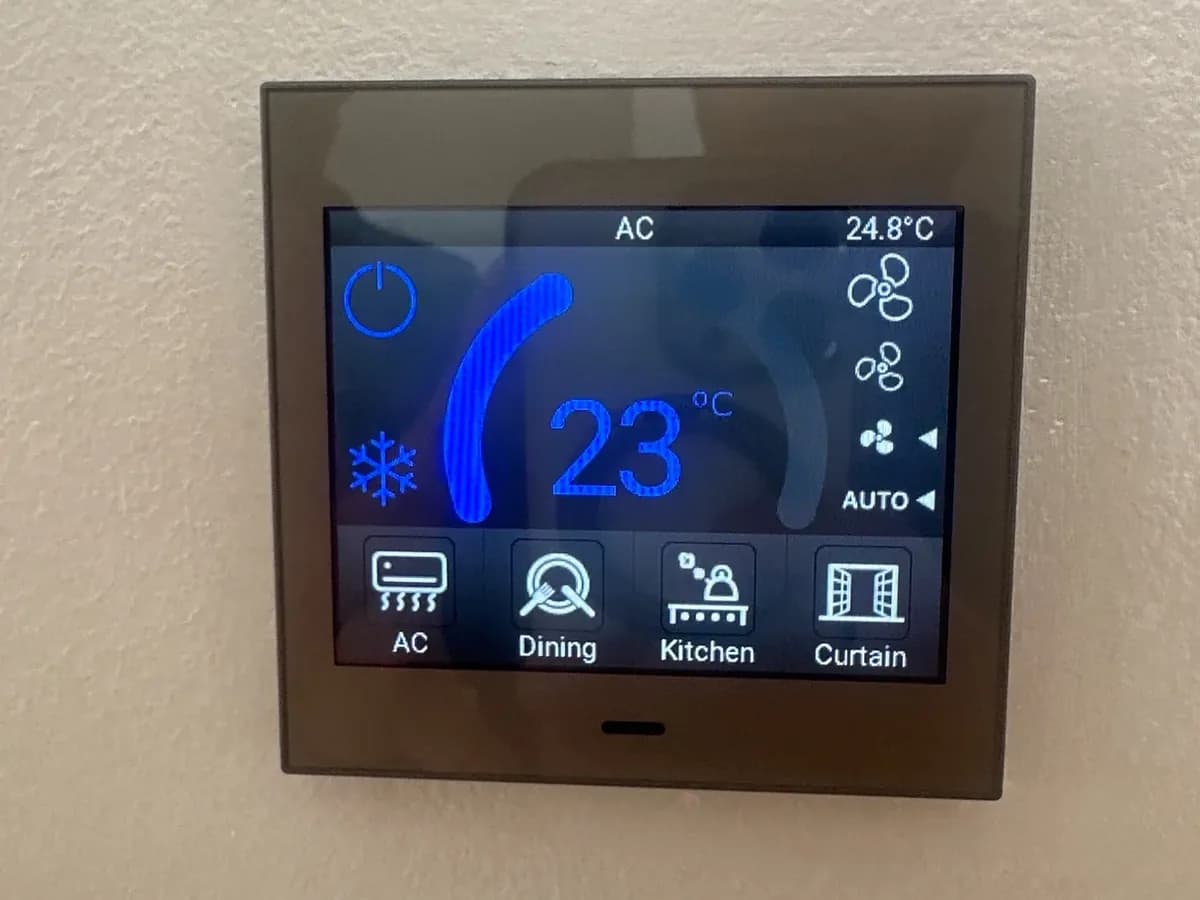
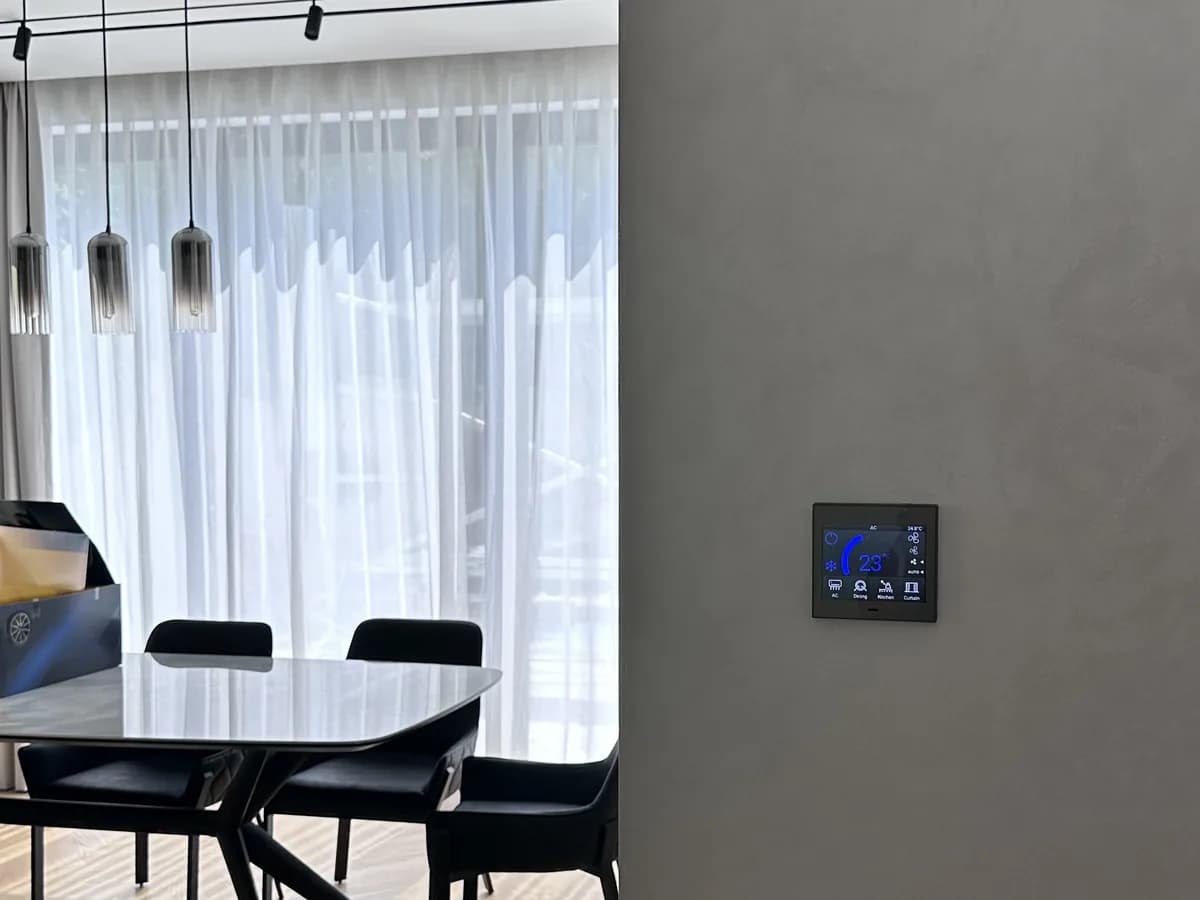
KNX, using the existing bus, actuators, keypads and room controllers. The existing HVAC gateway, re-parametered for the actual indoor units. A KNX touch panel in the dining area for air conditioning, lighting and curtains. The ETS project, rebuilt from the installation as built. Documentation in the Client Portal, and Iconic Care™ afterwards. No new hardware.
Installation
None, in the usual sense. Every device stayed where it was: no walls chased, no ceilings lifted, no replacement system. The work was at the distribution board and on the bus, with the household in residence throughout.
Programming and commissioning
We read every device on the bus, documented the installation as built, and loaded the new group address architecture across the house. We re-parametered the HVAC gateway for the actual indoor units, set up genuine room-by-room control with two-way status, and rewrote every keypad. The system was commissioned room by room with the owners present, and the ETS project, the group address schedule and the device list were handed over through the Client Portal, so the house is documented for good.
The outcome
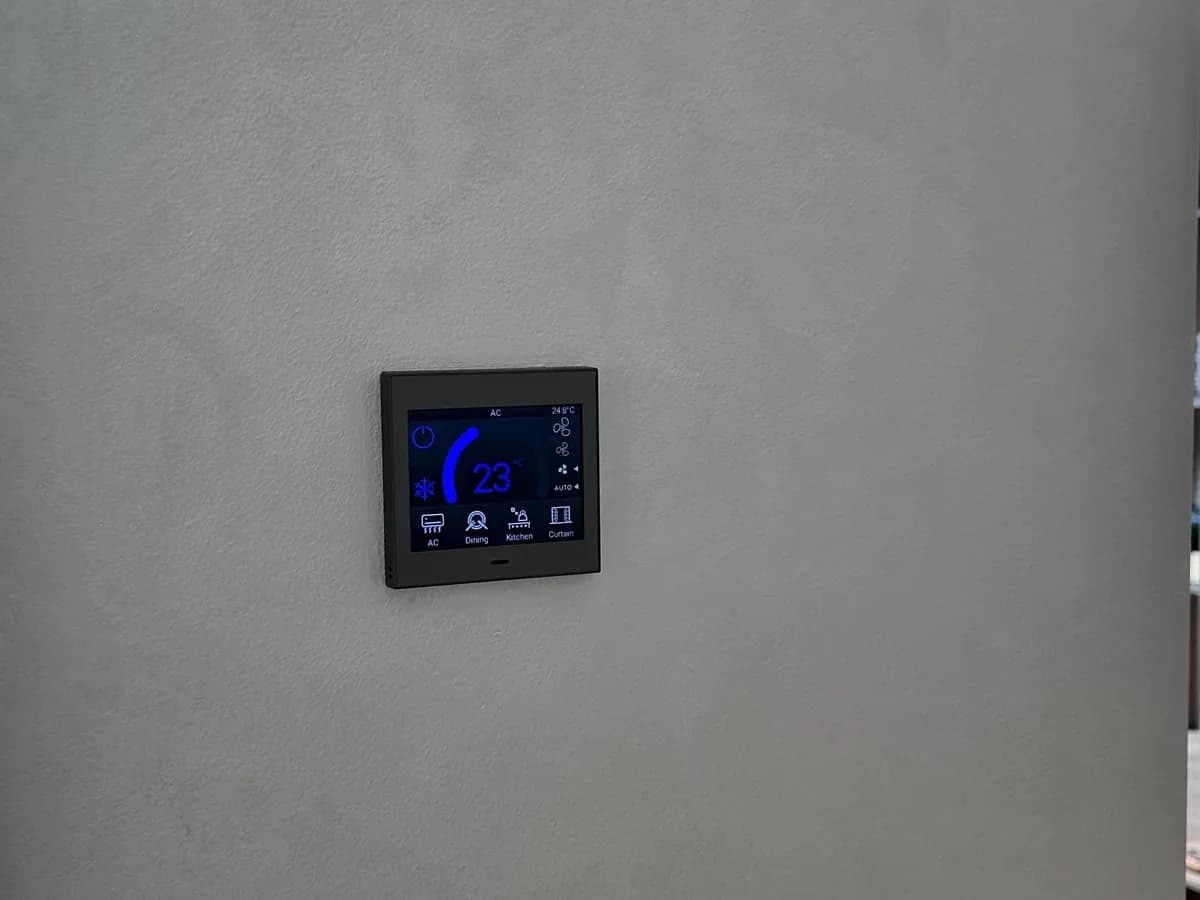
Every room cools to its set point and holds it. The keypads make sense. The owners have a system they can trust through a Dubai summer, and a written record of exactly what is in their walls. No new hardware, no chased walls, no replacement system, and the villa is now under Iconic Care™.
Most of the smart home problems we see in Dubai are not product problems. They are programming and documentation problems left behind by a contractor who has moved on. As a KNX Partner we take these systems over regularly. If yours is misbehaving, start with an audit, not a replacement quote.
Photographs
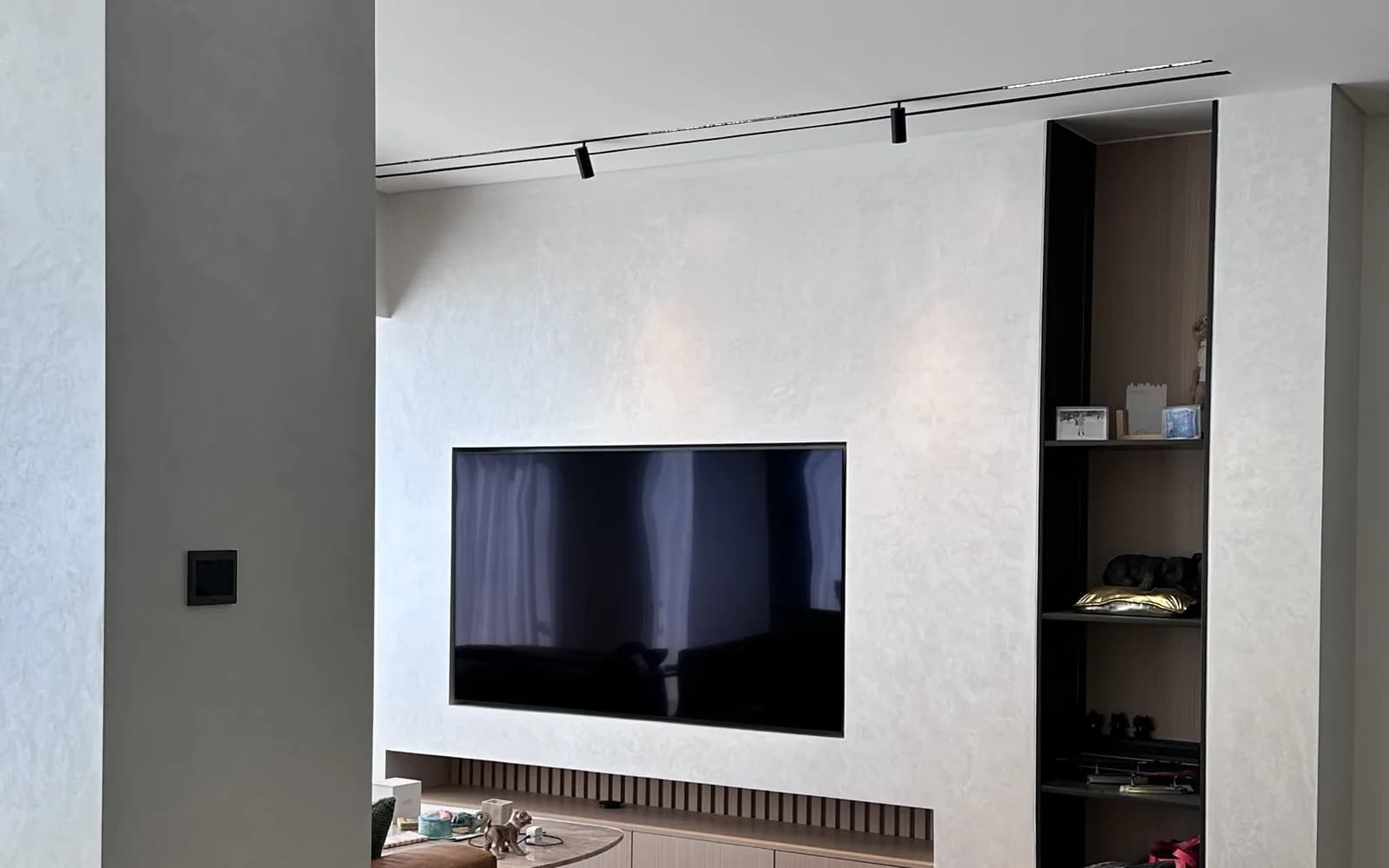
Four photographs from the finished house: the living room keypad on its pillar, room-by-room air conditioning control, a room controller holding 23 °C on a plaster wall, and the dining area's touch panel for air conditioning, lighting and curtains.